
December 15, 2025

Introducing Context Graph: AI With Real Business Context

Context Graph enhances the application of your product rules, sources, and tone for better retail data governance and stronger product discoverability across every channel.

This feature is available for customers on the

Professional

Tier or higher. Reach out to book a demo with our sales team today.

This feature is available for customers on the

Professional

Tier. Reach out to book a demo with our sales team today.

Introducing Context Graph: AI With Real Business Context

On this page

Most AI applications breaks the moment they hit real retail operations.

Not because the models aren't good enough – but because they don't understand how your business actually works.

Your sourcing hierarchy. Your naming conventions. Your compliance constraints. Your brand-level exceptions. Your category rules.

None of this is native to a general-purpose LLM.

So today, AI behaves like an untrained intern—sometimes brilliant, often chaotic, never predictable.

Trustana’s latest platform capability Context Graph fixes this.

The Foundation of Production-Grade AI

Today, all high-performing teams run on a shared context: rules, preferences, domain knowledge, tone, constraints, and institutional memory. This mix of formalized and unformalized factors help teams to make decisions that work best for their business environments.

In order for AI to perform at the highest levels, it needs the same thing.

Trustana’s Context Graph gives AI the institutional context it has been missing — so it can finally perform with the quality, consistency, and judgment your team expects.

What Goes Into Your Context Graph?
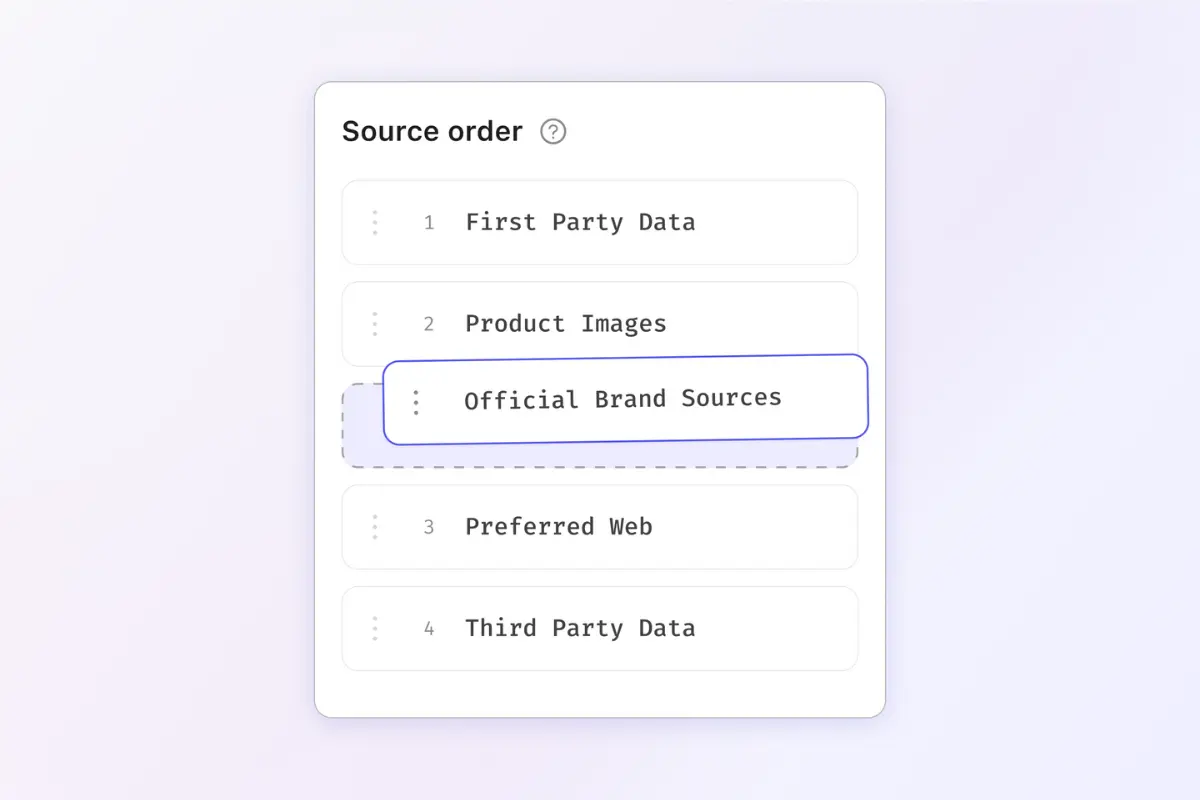
Context Graph is a governance layer for AI-generated product data.

It tells the AI exactly how your organization works:

  • Where to search and what to prioritize in that search
  • What sources to trust and how to validate those sources
  • What vocabulary to use or avoid and what tone to follow
  • Where overrides apply and what "done right" means for your brand
  • What SEO signals matter for your categories
  • What business context drives decisions (seasonality, regional variations, etc.)

Context Graph converts your business rules and operational intelligence into a structured policy system—one the AI follows consistently at scale across your entire catalog, whether that’s ten thousands SKUs or millions.

And don’t worry – setup can be done once (and adjusted as your business context evolves), and our team of product data experts is at the ready to assist!

How Will Context Graph Improve My AI Output?

Compared to a generic AI, Trustana’s Context Graph enables superior accuracy and task-adherence, reducing manual corrections your team may need to make, and freeing up capacity for higher value tasks.

Context Graph can be applied in a wide range of ways to your business, including:

  • Applying a complex naming convention to all 100,000 products in your catalog
  • Ensuring that data for your products is ONLY sourced from brand.com
  • Following your company’s guidance in terms of “banned words” or “preferred phrases”
  • Prioritizing what data sourced from your suppliers should be prioritized, and what data can be ignored
  • ...many more!
Traditional AI vs. Trustana AI with Context Graph

Ready To See It In Action?

Book a demo with Trustana and see how mid-market and enterprise retailers use Context Graph to deliver accurate, governed product data across every channel.
Context Graph FAQ  

Why can't I just use better prompts?

Prompts are instructions. Policies are contracts. At scale, you need precedence rules, version control, and audit trails—not longer prompts. Context Graph ensures your rules are enforced consistently across thousands of SKUs, not just suggested in a conversation.

How much setup does this require?

Most teams start with basic source and tone policies and refine from there. You don't need to map your entire operation on day one. Context Graph is designed to scale with you—start simple, add complexity as you need it.

What happens when policies conflict?

Context Graph uses a precedence model: Brand×Category overrides Brand, Brand overrides Category, Category overrides Account defaults. The system handles conflicts automatically based on specificity, so you always know which rule wins

Can I override the AI's decisions?

Always. Context Graph provides governance, not lock-in. Your team maintains full control to review, edit, or override any AI-generated content. The goal is to reduce manual work, not eliminate human judgment.

How is this different from a traditional PIM?

Instead of storing data and waiting for humans to update it, Trustana uses AI agents that work autonomously to enrich, validate, and optimize your product content at scale—all within governance rules you control.

Does this replace my existing PIM?

Trustana can work alongside your existing PIM or replace it entirely, depending on your needs. Many retailers use Trustana as their intelligence layer—governing how AI enriches data before it flows into legacy systems. Others replace their traditional PIM altogether, since Trustana handles both the repository and the enrichment natively. Either way, you get AI-powered automation without losing the governance and control you need.

How does this help with compliance and auditing?

Every attribute includes source-level provenance—you can trace exactly where information came from and which policies were applied. This makes audits straightforward and gives you defensible documentation for regulatory or legal review.

Get an Expert Review of Your Product Data

Get practical guidance on improving catalog quality, enrichment workflows, and AI readiness based on your current setup.

dynamic synthesis
dynamic-synthesis
operational layer
operational-layer
Evidence Layer
evidence-layer
Probabilistic Accuracy
probabilistic-accuracy
Deterministic accuracy
deterministic-accuracy
Product Attribute
product-attribute
Intelligent Product Attribute
intelligent-product-attribute
Factual Product Attribute
factual-product-attribute
Structured Product Attribute
structured-product-attribute
Google MCP (Model Context Protocol)
google-mcp-model-context-protocol
Retrieval-Augmented Generation (RAG)
retrieval-augmented-generation-rag
Product Data Activation (PDA)
product-data-activation-pda
Product Data Architecture (PDA)
product-data-architecture-pda
Context Graph
context-graph
Buy to Detail Rate (BTD)
buy-to-detail-rate-btd
White Label Product
white-label-product
User Experience (UX)
user-experience-ux
UPC (Universal Product Code)
upc-universal-product-code
Third-Party Marketplace
third-party-marketplace
Syndication
syndication
Structured Data
structured-data
Sell-Through Rate
sell-through-rate
Stale Content
stale-content
Search Relevance
search-relevance
Search Merchandising
search-merchandising
SKU-Level Analytics
sku-level-analytics
SKU Rationalization
sku-rationalization
SKU Performance
sku-performance
SKU (Stock Keeping Unit)
sku-stock-keeping-unit
SEO (Search Engine Optimization)
seo-search-engine-optimization
Rich Media
rich-media
Retailer Portal
retailer-portal
Retail Media
retail-media
Retail Content Syndication
retail-content-syndication
Repricing Tool
repricing-tool
Retail Analytics
retail-analytics
Replatforming
replatforming
Real-Time Updates
real-time-updates
Quality Assurance (QA)
quality-assurance-qa
Product Visibility
product-visibility
Product Variant
product-variant
Product Validation
product-validation
Product Upload
product-upload
Product Title Optimization
product-title-optimization
Product Taxonomy Tree
product-taxonomy-tree
Product Taxonomy
product-taxonomy
Product Tagging
product-tagging
Product Syndication Lag
product-syndication-lag
Product Syndication
product-syndication
Product Schema
product-schema
Product Status Tracking
product-status-tracking
Product Page Bounce Rate
product-page-bounce-rate
Product Onboarding
product-onboarding
Product Metadata
product-metadata
Product Matching
product-matching
Product Lifecycle Stage
product-lifecycle-stage
Product Information Management (PIM)
product-information-management-pim
Product Lifecycle Management (PLM)
product-lifecycle-management-plm
Product Info Templates
product-info-templates
Product Import
product-import
Product Feed Validation
product-feed-validation
Product Feed Scheduling
product-feed-scheduling
Product Feed
product-feed
Product Family
product-family
Product Discovery
product-discovery
Product Export
product-export
Product Dimension Attributes
product-dimension-attributes
Product Detail Page (PDP)
product-detail-page-pdp
Product Description
product-description
Product Data Versioning
product-data-versioning
Product Data Syndication Platforms
product-data-syndication-platforms
Product Data Sheet
product-data-sheet
Product Data Quality
product-data-quality
Product Content Management (PCM)
product-content-management-pcm
Product Data Harmonization
product-data-harmonization
Product Content Enrichment
product-content-enrichment
Product Comparison
product-comparison
Product Compliance
product-compliance
Product Channel Fit
product-channel-fit
Product Categorization
product-categorization
Product Bundling
product-bundling
Product Badging
product-badging
Product Attributes
product-attributes
Product Attribute Completeness
product-attribute-completeness
Price Scraping
price-scraping
Personalization
personalization
PDP Optimization
pdp-optimization
PDP Heatmap
pdp-heatmap
PDP Conversion Rate
pdp-conversion-rate
Out-of-Stock Alerts
out-of-stock-alerts
Omnichannel
omnichannel
Omnichannel Strategy
omnichannel-strategy
Net New SKU Creation
net-new-sku-creation
Multichannel Retailing
multichannel-retailing
Metadata
metadata
Mobile Optimization
mobile-optimization
Merchant-to-Merchant (M2M)
merchant-to-merchant-m2m
Marketplace Listing Errors
marketplace-listing-errors
Marketplace Reconciliation
marketplace-reconciliation
Marketplace Compliance
marketplace-compliance
Marketplace
marketplace
MAP Pricing (Minimum Advertised Price)
map-pricing-minimum-advertised-price
Localization Tags
localization-tags
Long-Tail Keywords
long-tail-keywords
Listing Optimization
listing-optimization
Lifecycle Automation
lifecycle-automation
Key Performance Indicator (KPI)
key-performance-indicator-kpi
Inventory Management
inventory-management
Intelligent Search
intelligent-search
Image Optimization
image-optimization
Hyperpersonalization
hyperpersonalization
Headless Commerce
headless-commerce
Generative Engine Optimization (GEO)
generative-engine-optimization-geo
Generative AI
generative-ai
Fuzzy Search
fuzzy-search
GTM (Go-to-Market) Strategy
gtm-go-to-market-strategy
GTIN (Global Trade Item Number)
gtin-global-trade-item-number
Flat File
flat-file
First-Party Data
first-party-data-a51e9
First-Party Data
first-party-data
First-Mile Fulfillment
first-mile-fulfillment
Feed Testing Environment
feed-testing-environment
Feed-Based Advertising
feed-based-advertising
Feed Optimization Tool
feed-optimization-tool
Feed Management
feed-management
Feed Diagnostics
feed-diagnostics
Faceted Search
faceted-search
ERP (Enterprise Resource Planning)
erp-enterprise-resource-planning
Explainable AI
explainable-ai
Enrichment Rules
enrichment-rules
Enhanced Brand Content (EBC)
enhanced-brand-content-ebc
EPID (eBay Product ID)
epid-ebay-product-id
EAN (European Article Number)
ean-european-article-number
E-commerce Platform
e-commerce-platform
Dynamic Pricing
dynamic-pricing
Duplicate Content
duplicate-content
Direct-to-Consumer (DTC)
direct-to-consumer-dtc
Drop Shipping
drop-shipping
Digital Transformation
digital-transformation
Digital Shelf
digital-shelf
Digital Asset Management (DAM)
digital-asset-management-dam
Data Syncing
data-syncing
Data Normalization
data-normalization
Data Mapping
data-mapping
Data Governance
data-governance
Data Feed Transformation
data-feed-transformation
Data Feed Rules
data-feed-rules
Data Feed Error Report
data-feed-error-report
Data Enrichment Pipeline
data-enrichment-pipeline
Data Drift
data-drift
Data Deduplication
data-deduplication
Data Clean-up
data-clean-up
Customer Experience (CX)
customer-experience-cx
Conversion Rate
conversion-rate
Content Scalability
content-scalability
Content Localization
content-localization
Content Governance
content-governance
Content Gaps
content-gaps
Consumer-to-Merchant (C2M)
consumer-to-merchant-c2m
Channel-Specific Optimization
channel-specific-optimization
Channel Readiness
channel-readiness
Category Mapping
category-mapping
Catalog Management
catalog-management
Buy Now, Pay Later (BNPL)
buy-now-pay-later-bnpl
Breadcrumb Navigation
breadcrumb-navigation
Automated Categorization
automated-categorization
Automated Content Generation
automated-content-generation
Automated Workflows
automated-workflows
Blacklisting (in feeds)
blacklisting-in-feeds
Attribution Tags
attribution-tags
Attribute Standardization
attribute-standardization
Answer Engine Optimization (AEO)
answer-engine-optimization-aeo
Artificial Intelligence (AI)
artificial-intelligence-ai
Attribute Mapping
attribute-mapping
Agentic E-commerce
agentic-e-commerce
A/B Testing
a-b-testing
API (Application Programming Interface)
api-application-programming-interface
AI Overviews
ai-overviews
AI Tagging
ai-tagging
AI Agents
ai-agents
AI Indexing
ai-indexing