
July 14, 2025

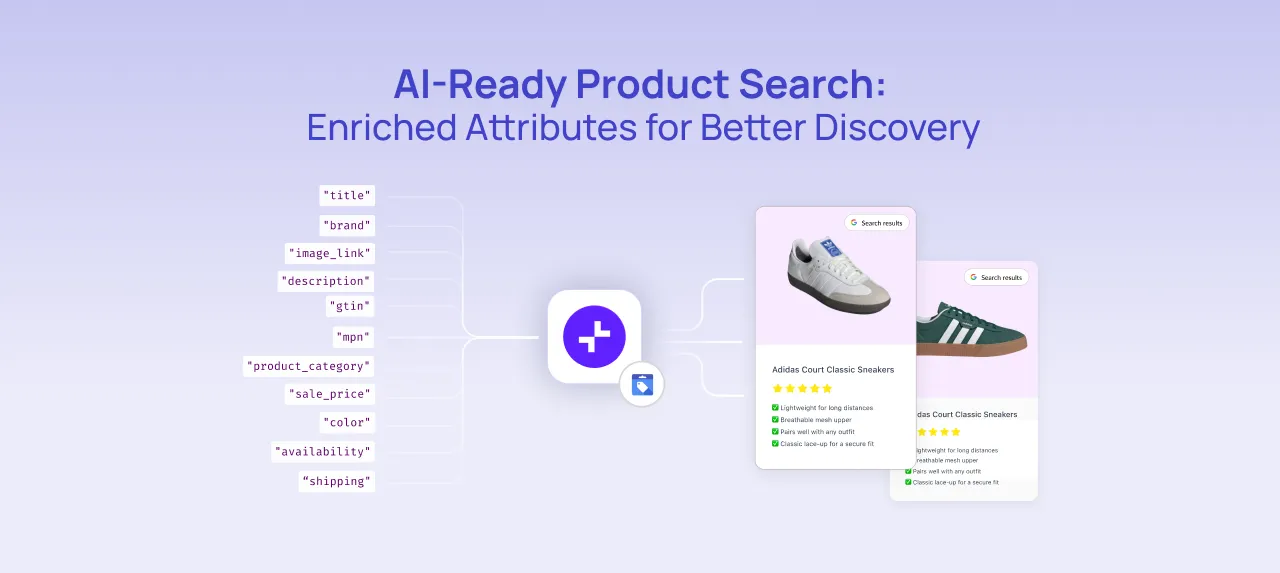
AI-Ready Product Search: Enriched Attributes for Better Discovery

Learn how enriched product attributes power AI-ready search. Discover why clean, structured catalogs improve relevance, conversions, and customer satisfaction.

Marketing Manager - Trustana

This feature is available for customers on the

Tier or higher. Reach out to book a demo with our sales team today.

This feature is available for customers on the

Tier. Reach out to book a demo with our sales team today.

AI-Ready Product Search: Enriched Attributes for Better Discovery

Table of Contents

For most e-commerce businesses, search is the entry point to the customer journey. It is the moment when intent is expressed, when a shopper tells you exactly what they want.

In a world where expectations are shaped by Google and Amazon, customers assume search will just work. Yet many retailers fall far too short to meet this expectation and it can cause a real rift between what the customer wants and what they get on the other side of your search results.This often manifests in incomplete, irrelevant, or frustrating, results that drives shoppers to competitors.

Why Search Defines Retail Success

AI-driven search holds great promise, but it only works if the catalog feeding it is enriched with structured, accurate, and complete attributes. Without this foundation, advanced algorithms cannot interpret natural language queries or deliver meaningful results. Search becomes the place where bad data is exposed most clearly, and where retailers lose the most revenue.

From Keywords to Natural Language Queries

Search behavior has changed dramatically in recent years. Shoppers no longer type a single keyword and scroll through dozens of results. Instead, they use natural language queries that mirror the way they speak to people. Queries like:

  • “Eco friendly running shoes under $150”
  • “Lightweight trail backpack for women”
  • “Vegan leather crossbody bag with gold hardware”

For an AI search engine to understand and match these queries, it needs product data that is structured to reflect real-world attributes and benefits. Without enriched attributes, the engine cannot parse meaning, and shoppers see irrelevant results.

Enabling natural language search requires moving beyond basic product names and descriptions. Retailers need taxonomies, attribute hierarchies, and structured metadata that align to how people search. This shift is essential for capturing intent and converting it into sales.

What Product Attributes Are Essential

Not all attributes carry equal weight in search. Executives must prioritize enrichment efforts that directly support discovery and conversion. Attributes are heavily reliant on industry but we'll outline some of the most critical attributes below.

Diagram illustrating essential product attributes such as material, size, use case, taxonomy, and price enabling AI-ready search.
  • Material and Composition: Essential for categories like apparel, furniture, and consumer goods where product feel, durability, or sustainability influence decisions.
  • Size and Fit: Key for apparel, footwear, and home goods where incorrect sizing drives costly returns.
  • Use Case and Occasion: Attributes like “hiking,” “wedding,” or “school” reflect the context of purchase and align with how shoppers phrase their queries.
  • Style and Design Elements: Colors, finishes, and design descriptors are critical for personalization and matching visual intent.
  • Price Ranges and Filters: Structured price attributes allow queries like “under $150” to work correctly.
  • Taxonomy Alignment: Consistent categories across systems ensure AI engines can map relationships between similar products.

When these attributes are missing, incomplete, or inconsistent, AI search systems cannot make meaningful connections, and customers abandon sessions in frustration.

Search Uplift from Attribute Enrichment

Consider a global outdoor retailer that upgraded its product search capabilities as part of a broader AI adoption effort. Prior to enrichment, shoppers searching for “waterproof jackets” often received results that included fleece pullovers or casual coats because the catalog lacked standardized material and weatherproofing attributes.

After a data enrichment initiative filled in missing details and aligned taxonomy, the same queries returned precise matches. The retailer measured a double-digit improvement in search click-through rate and a 12 percent lift in add-to-cart conversions.

This example illustrates a broader truth: AI search tools are not inherently broken. They succeed or fail based on the structure and completeness of the product data they are given.

How to Make Your Catalog Search-Ready

Executives should not think of search as an isolated technology project. It is an organizational capability that depends on disciplined data practices. Preparing a catalog for AI-ready search requires several key steps:

  1. Audit Search-Dependent Attributes - Evaluate how many SKUs have complete data for material, size, style, and price.
  2. Enrich Missing Attributes - Use automation to fill gaps, supported by human validation for accuracy.
  3. Normalize Taxonomy - Align product categories and naming conventions across systems and regions.
  4. Apply Schema Markup - Ensure product feeds include structured data that AI engines can interpret.
  5. Continuously Monitor and Govern - Establish feedback loops that measure search performance and tie back to data quality.

These steps are not one-time fixes. They are part of an ongoing culture  that ensures AI investments deliver measurable ROI from inception onward.

Search Is Where AI Readiness Is Proven

Search is often the first and most visible test of AI readiness in retail. When results are accurate, relevant, and tailored to shopper intent, customers reward brands with loyalty and conversions. When results fail, they abandon carts and take their business elsewhere.

For senior leaders, the lesson is simple. Do not invest in advanced AI search tools until your product data foundation is in order. The return on AI search depends entirely on the quality of the attributes, taxonomy, and schema beneath it. Clean, enriched data is the difference between irrelevant results and meaningful discovery.

Explore the AI-Readiness for Retail Guide for a comprehensive framework to follow for retail AI-readiness.
AI-Ready Product Search FAQ

Why is natural language search more demanding than keyword search?

Because it requires structured attributes like material, size, and use case to interpret complex queries accurately.

What attributes are most critical for AI search readiness?

Material, size, use case, style, taxonomy alignment, and structured price ranges are essential for relevance.

How does attribute enrichment improve conversions?

By ensuring AI search results are accurate and relevant, enriched attributes reduce dead ends and increase add-to-cart rates.

What ROI can executives expect from AI-ready search?

Retailers report double-digit improvements in search click-through rates and conversion lifts of 10 to 15 percent after enrichment.

How can leaders sustain search performance over time?

By embedding continuous governance, data audits, and schema compliance into digital operations.

Subscribe to our newsletter today

Lorem ipsum dolor sit amet consectetur nulla augue arcu pellentesque eget ut libero aliquet ut nibh.

Retrieval-Augmented Generation (RAG)
retrieval-augmented-generation-rag
Product Data Activation (PDA)
product-data-activation-pda
Product Data Architecture (PDA)
product-data-architecture-pda
Context Graph
context-graph
Buy to Detail Rate (BTD)
buy-to-detail-rate-btd
White Label Product
white-label-product
User Experience (UX)
user-experience-ux
UPC (Universal Product Code)
upc-universal-product-code
Third-Party Marketplace
third-party-marketplace
Syndication
syndication
Structured Data
structured-data
Sell-Through Rate
sell-through-rate
Stale Content
stale-content
Search Relevance
search-relevance
Search Merchandising
search-merchandising
SKU-Level Analytics
sku-level-analytics
SKU Rationalization
sku-rationalization
SKU Performance
sku-performance
SKU (Stock Keeping Unit)
sku-stock-keeping-unit
SEO (Search Engine Optimization)
seo-search-engine-optimization
Rich Media
rich-media
Retailer Portal
retailer-portal
Retail Media
retail-media
Retail Content Syndication
retail-content-syndication
Repricing Tool
repricing-tool
Retail Analytics
retail-analytics
Replatforming
replatforming
Real-Time Updates
real-time-updates
Quality Assurance (QA)
quality-assurance-qa
Product Visibility
product-visibility
Product Variant
product-variant
Product Validation
product-validation
Product Upload
product-upload
Product Title Optimization
product-title-optimization
Product Taxonomy Tree
product-taxonomy-tree
Product Taxonomy
product-taxonomy
Product Tagging
product-tagging
Product Syndication Lag
product-syndication-lag
Product Syndication
product-syndication
Product Schema
product-schema
Product Status Tracking
product-status-tracking
Product Page Bounce Rate
product-page-bounce-rate
Product Onboarding
product-onboarding
Product Metadata
product-metadata
Product Matching
product-matching
Product Lifecycle Stage
product-lifecycle-stage
Product Information Management (PIM)
product-information-management-pim
Product Lifecycle Management (PLM)
product-lifecycle-management-plm
Product Info Templates
product-info-templates
Product Import
product-import
Product Feed Validation
product-feed-validation
Product Feed Scheduling
product-feed-scheduling
Product Feed
product-feed
Product Family
product-family
Product Discovery
product-discovery
Product Export
product-export
Product Dimension Attributes
product-dimension-attributes
Product Detail Page (PDP)
product-detail-page-pdp
Product Description
product-description
Product Data Versioning
product-data-versioning
Product Data Syndication Platforms
product-data-syndication-platforms
Product Data Sheet
product-data-sheet
Product Data Quality
product-data-quality
Product Content Management (PCM)
product-content-management-pcm
Product Data Harmonization
product-data-harmonization
Product Content Enrichment
product-content-enrichment
Product Comparison
product-comparison
Product Compliance
product-compliance
Product Channel Fit
product-channel-fit
Product Categorization
product-categorization
Product Bundling
product-bundling
Product Badging
product-badging
Product Attributes
product-attributes
Product Attribute Completeness
product-attribute-completeness
Price Scraping
price-scraping
Personalization
personalization
PDP Optimization
pdp-optimization
PDP Heatmap
pdp-heatmap
PDP Conversion Rate
pdp-conversion-rate
Out-of-Stock Alerts
out-of-stock-alerts
Omnichannel
omnichannel
Omnichannel Strategy
omnichannel-strategy
Net New SKU Creation
net-new-sku-creation
Multichannel Retailing
multichannel-retailing
Metadata
metadata
Mobile Optimization
mobile-optimization
Merchant-to-Merchant (M2M)
merchant-to-merchant-m2m
Marketplace Listing Errors
marketplace-listing-errors
Marketplace Reconciliation
marketplace-reconciliation
Marketplace Compliance
marketplace-compliance
Marketplace
marketplace
MAP Pricing (Minimum Advertised Price)
map-pricing-minimum-advertised-price
Localization Tags
localization-tags
Long-Tail Keywords
long-tail-keywords
Listing Optimization
listing-optimization
Lifecycle Automation
lifecycle-automation
Key Performance Indicator (KPI)
key-performance-indicator-kpi
Inventory Management
inventory-management
Intelligent Search
intelligent-search
Image Optimization
image-optimization
Hyperpersonalization
hyperpersonalization
Headless Commerce
headless-commerce
Generative Engine Optimization (GEO)
generative-engine-optimization-geo
Generative AI
generative-ai
Fuzzy Search
fuzzy-search
GTM (Go-to-Market) Strategy
gtm-go-to-market-strategy
GTIN (Global Trade Item Number)
gtin-global-trade-item-number
Flat File
flat-file
First-Party Data
first-party-data-a51e9
First-Party Data
first-party-data
First-Mile Fulfillment
first-mile-fulfillment
Feed Testing Environment
feed-testing-environment
Feed-Based Advertising
feed-based-advertising
Feed Optimization Tool
feed-optimization-tool
Feed Management
feed-management
Feed Diagnostics
feed-diagnostics
Faceted Search
faceted-search
ERP (Enterprise Resource Planning)
erp-enterprise-resource-planning
Explainable AI
explainable-ai
Enrichment Rules
enrichment-rules
Enhanced Brand Content (EBC)
enhanced-brand-content-ebc
EPID (eBay Product ID)
epid-ebay-product-id
EAN (European Article Number)
ean-european-article-number
E-commerce Platform
e-commerce-platform
Dynamic Pricing
dynamic-pricing
Duplicate Content
duplicate-content
Direct-to-Consumer (DTC)
direct-to-consumer-dtc
Drop Shipping
drop-shipping
Digital Transformation
digital-transformation
Digital Shelf
digital-shelf
Digital Asset Management (DAM)
digital-asset-management-dam
Data Syncing
data-syncing
Data Normalization
data-normalization
Data Mapping
data-mapping
Data Governance
data-governance
Data Feed Transformation
data-feed-transformation
Data Feed Rules
data-feed-rules
Data Feed Error Report
data-feed-error-report
Data Enrichment Pipeline
data-enrichment-pipeline
Data Drift
data-drift
Data Deduplication
data-deduplication
Data Clean-up
data-clean-up
Customer Experience (CX)
customer-experience-cx
Conversion Rate
conversion-rate
Content Scalability
content-scalability
Content Localization
content-localization
Content Governance
content-governance
Content Gaps
content-gaps
Consumer-to-Merchant (C2M)
consumer-to-merchant-c2m
Channel-Specific Optimization
channel-specific-optimization
Channel Readiness
channel-readiness
Category Mapping
category-mapping
Catalog Management
catalog-management
Buy Now, Pay Later (BNPL)
buy-now-pay-later-bnpl
Breadcrumb Navigation
breadcrumb-navigation
Automated Categorization
automated-categorization
Automated Content Generation
automated-content-generation
Automated Workflows
automated-workflows
Blacklisting (in feeds)
blacklisting-in-feeds
Attribution Tags
attribution-tags
Attribute Standardization
attribute-standardization
Artificial Intelligence (AI)
artificial-intelligence-ai
Attribute Mapping
attribute-mapping
Agentic E-commerce
agentic-e-commerce
A/B Testing
a-b-testing
API (Application Programming Interface)
api-application-programming-interface
AI Overviews
ai-overviews
AI Tagging
ai-tagging
AI Agents
ai-agents
AI Indexing
ai-indexing