
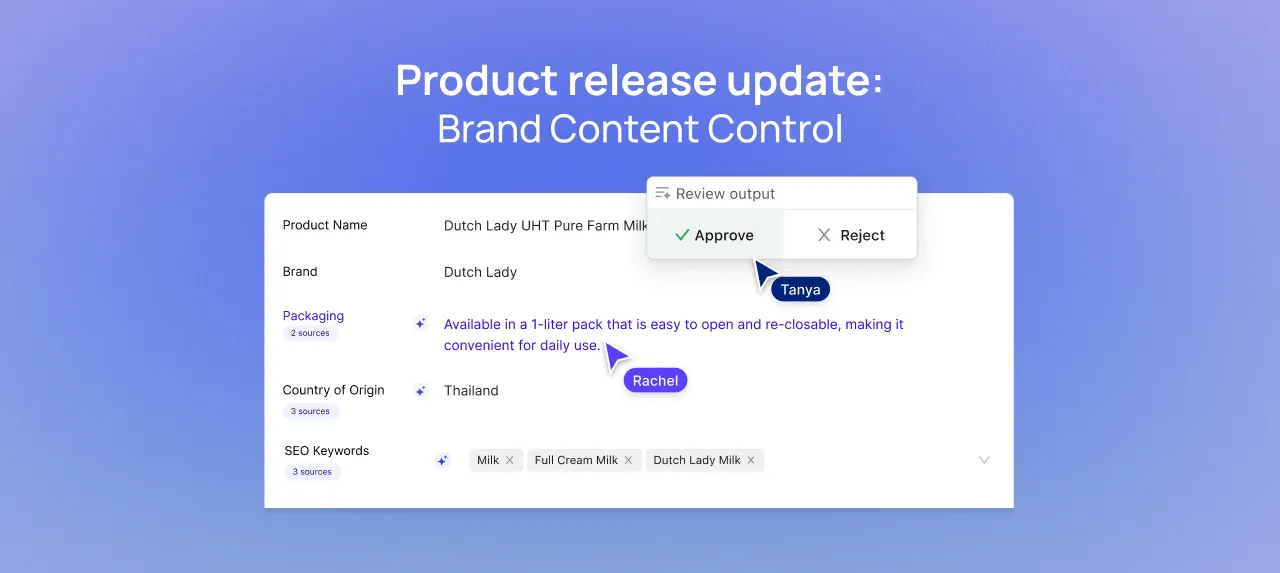
Brand-Safe Product Data Enrichment: How Retailers Control AI Search & Content

Learn how Trustana enrichment applies brand guidelines to deliver accurate, consistent product content at scale.

This feature is available for customers on the

Professional

Tier or higher. Reach out to book a demo with our sales team today.

This feature is available for customers on the

Professional

Tier. Reach out to book a demo with our sales team today.

Brand-Safe Product Data Enrichment: How Retailers Control AI Search & Content

On this page

AI has made product enrichment much faster. But fast does not always mean correct. And it often means other essential components of good content fall by the wayside.

Many retail teams learn that using one basic AI prompt togenerate product content does not create a clear, steady experience. General AI simply has trouble following rules consistently.

Teams turn on automation expecting clean, reliable content. Instead, the results are all over the place. Some products turn out great. Others use wrong data, wrong tone, or untrustworthy sources.

This leaves many teams unsure about using AI for enrichment when things like brand guidelines are essential. When brands have strict standards or legal rules, the concern, and the risk around bad AI outputs, grows.

That’s why Trustana focuses on clear guidelines and rules that help AI find the right sources, check its work, and create content that stays accurate, on-brand, and in full compliance with requirements.

The Missing Layer: Brand Guidelines Inside Enrichment

Even when factual data is correct, that content does nothing to elevate a brand above competitors and bring their unique approach to products and lifestyles to life on the page.

Shoppers are more aware than ever of how a brand operates in the retail space. They want to be associated with companies and products that make them feel good about buying. Content is the main way to communicate those value points, and retailers have to get it right in order to succeed.

How Missing Brand Rules Lead to Risk

If brand guidelines are not defined within the enrichment framework, automated content defaults to generic language, tone varies, vocabulary drifts, and mandatory do’s and don’ts get overlooked.

Over time, product pages lose any distinct voice and differentiation, and that undercuts all the hard work a brand does to build credibility and equity in the marketplace.

Why Manual Review Becomes the Bottleneck

Because generic AI can’t enforce brand rules on its own, teams step in to review and edit content manually. This slows down launches and limits how much automation can realistically scale.

A Better Model: Rule-Driven, Brand-Safe Product Enrichment

High-performing enrichment systems like Trustana take a different approach. Instead of assuming one global logic, they allow retailers to define how enrichment should behave before it runs.

With Trustana, brand voice is applied automatically at scale. Tone, vocabulary preferences, and content rules are all defined once according to a business’ needs and applied automatically to every product. This ensures consistency without manual intervention.

How Brand-Safe Enrichment Works in Trustana

Trustana uses centralized rules for a simple setup. Rules are managed at the admin layer, where teams define the contextual elements that power Trustana’s AI product enrichment, like search logic, source priority, and brand guidelines.

Hierarchical Logic That Adapts to Every Product - When more specificity is needed, rules can be applied at the category, brand, or brand-category level. The most specific rule always takes priority.

Built-In Validation Before Content Goes Live - Every enrichment task validates new content against the search, source, and brand rules defined at the admin level, before it enters the catalog. Errors are prevented upstream instead of corrected later, which cuts down on manual cleanup tasks for teams.

See What Brand-Safe Enrichment Looks Like in Practice

If your team is using AI to scale product content, the difference between fast and trustworthy comes down to rules.

See how brand-safe enrichment helps retailers control search logic, trusted sources, and brand guidelines without slowing down time to market.

Get a demo or speak to sales to see for yourself how Trustana’s brand-safe product enrichment keeps everything on-brand..
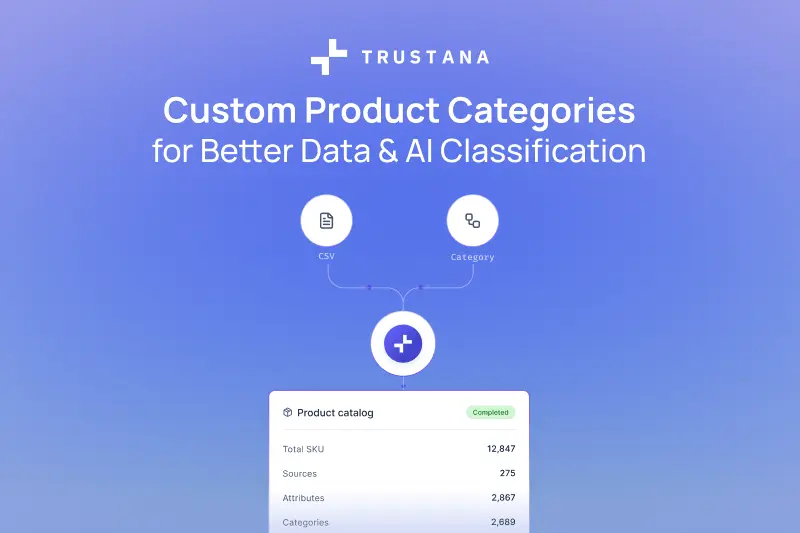
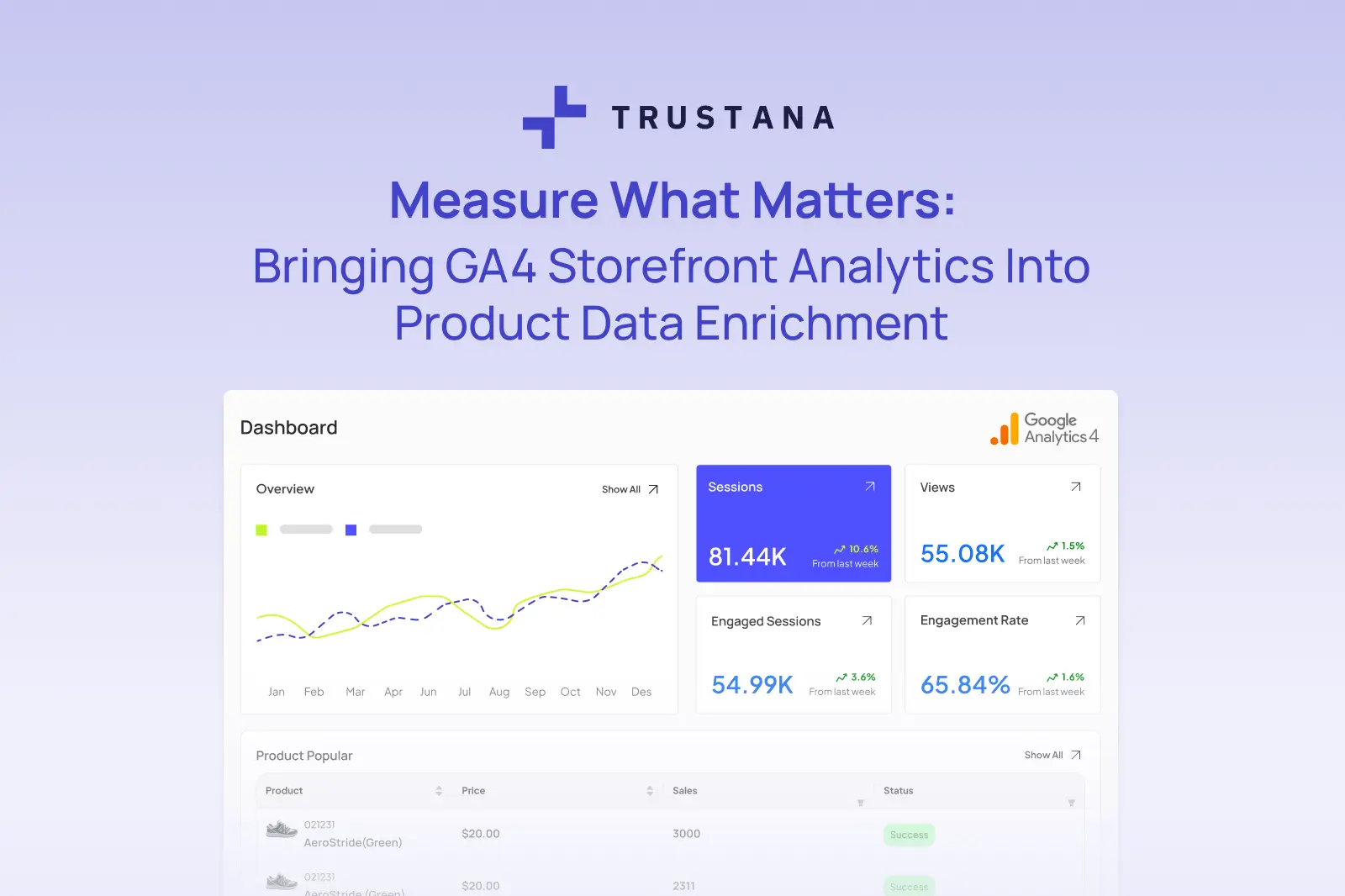
Brand Guidelines & Targeted Enrichment FAQ

How does brand-safe enrichment affect our ability to scale ecommerce?

Brand-safe enrichment allows teams to scale product content without increasing review headcount. When brand rules are enforced automatically, growth in SKUs, channels, or regions does not create a proportional increase in manual work. This supports faster expansion without sacrificing quality.

What risks do we reduce by embedding brand guidelines into enrichment?

Embedding brand guidelines reduces three major risks:
brand inconsistency, regulatory exposure, and reputational damage. It ensures that automated content does not introduce off-brand language, misleading claims, or unapproved messaging into customer-facing channels.

How does this change the operating model for product content teams?

Instead of spending time correcting errors after enrichment, teams shift toward defining standards upfront. This moves the organization from reactive cleanup to proactive governance, improving efficiency and predictability.

Does this reduce dependency on manual review and QA teams?

Yes. When tone, terminology, and sourcing rules are enforced at creation time, fewer products require human intervention. This allows QA teams to focus on exceptions and strategic oversight rather than routine validation.

How does this support brand differentiation in crowded markets?

Consistent brand voice across thousands of SKUs helps reinforce positioning and trust. When every product reflects the same tone and standards, the brand becomes more recognizable and credible, even at large scale.

What impact does this have on time-to-market?

By reducing rework and approval cycles, brand-guided enrichment shortens the time between product onboarding and publication. This allows merchandising and marketing teams to launch faster without compromising standards.

How does this improve alignment between marketing, ecommerce, and data teams?

Shared, system-level brand rules create a single source of truth for how products should be presented. This reduces friction between departments and minimizes subjective debates about “what’s correct” or “what’s on-brand.”

Is this approach flexible enough for multiple brands or regions?

Yes. Brand guidelines and validation rules can be applied at different levels, allowing organizations to support multiple brands, markets, and languages while maintaining centralized governance.

How does this contribute to long-term ROI from AI investments?

AI delivers the strongest returns when its outputs are reliable. By reducing errors, reprocessing, and brand-related risks, brand-safe enrichment improves the long-term economics of automation and increases confidence in scaling AI-driven workflows.

Who inside the organization benefits most from this approach?

  • Executive leaders gain visibility and control over brand governance
  • Ecommerce teams gain faster, more reliable launches
  • Marketing teams gain consistent brand expression
  • Data teams are confronted with fewer exceptions and gain cleaner workflows

The organization benefits from sustainable, controlled growth.

Get an Expert Review of Your Product Data

Get practical guidance on improving catalog quality, enrichment workflows, and AI readiness based on your current setup.

AI PIM (AI-Powered Product Information Management)
ai-pim-ai-powered-product-information-management
Enrichment Layer
enrichment-layer
Large Language Model (LLM)
large-language-model-llm
Dynamic Synthesis
dynamic-synthesis
Operational Layer
operational-layer
Evidence Layer
evidence-layer
Probabilistic Accuracy
probabilistic-accuracy
Deterministic accuracy
deterministic-accuracy
Product Attribute
product-attribute
Intelligent Product Attribute
intelligent-product-attribute
Factual Product Attribute
factual-product-attribute
Structured Product Attribute
structured-product-attribute
Google MCP (Model Context Protocol)
google-mcp-model-context-protocol
Retrieval-Augmented Generation (RAG)
retrieval-augmented-generation-rag
Product Data Activation (PDA)
product-data-activation-pda
Product Data Architecture (PDA)
product-data-architecture-pda
Context Graph
context-graph
Buy to Detail Rate (BTD)
buy-to-detail-rate-btd
White Label Product
white-label-product
User Experience (UX)
user-experience-ux
UPC (Universal Product Code)
upc-universal-product-code
Third-Party Marketplace
third-party-marketplace
Syndication
syndication
Structured Data
structured-data
Sell-Through Rate
sell-through-rate
Stale Content
stale-content
Search Relevance
search-relevance
Search Merchandising
search-merchandising
SKU-Level Analytics
sku-level-analytics
SKU Rationalization
sku-rationalization
SKU Performance
sku-performance
SKU (Stock Keeping Unit)
sku-stock-keeping-unit
SEO (Search Engine Optimization)
seo-search-engine-optimization
Rich Media
rich-media
Retailer Portal
retailer-portal
Retail Media
retail-media
Retail Content Syndication
retail-content-syndication
Repricing Tool
repricing-tool
Retail Analytics
retail-analytics
Replatforming
replatforming
Real-Time Updates
real-time-updates
Quality Assurance (QA)
quality-assurance-qa
Product Visibility
product-visibility
Product Variant
product-variant
Product Validation
product-validation
Product Upload
product-upload
Product Title Optimization
product-title-optimization
Product Taxonomy Tree
product-taxonomy-tree
Product Taxonomy
product-taxonomy
Product Tagging
product-tagging
Product Syndication Lag
product-syndication-lag
Product Syndication
product-syndication
Product Schema
product-schema
Product Status Tracking
product-status-tracking
Product Page Bounce Rate
product-page-bounce-rate
Product Onboarding
product-onboarding
Product Metadata
product-metadata
Product Matching
product-matching
Product Lifecycle Stage
product-lifecycle-stage
Product Information Management (PIM)
product-information-management-pim
Product Lifecycle Management (PLM)
product-lifecycle-management-plm
Product Info Templates
product-info-templates
Product Import
product-import
Product Feed Validation
product-feed-validation
Product Feed Scheduling
product-feed-scheduling
Product Feed
product-feed
Product Family
product-family
Product Discovery
product-discovery
Product Export
product-export
Product Dimension Attributes
product-dimension-attributes
Product Detail Page (PDP)
product-detail-page-pdp
Product Description
product-description
Product Data Versioning
product-data-versioning
Product Data Syndication Platforms
product-data-syndication-platforms
Product Data Sheet
product-data-sheet
Product Data Quality
product-data-quality
Product Content Management (PCM)
product-content-management-pcm
Product Data Harmonization
product-data-harmonization
Product Content Enrichment
product-content-enrichment
Product Comparison
product-comparison
Product Compliance
product-compliance
Product Channel Fit
product-channel-fit
Product Categorization
product-categorization
Product Bundling
product-bundling
Product Badging
product-badging
Product Attributes
product-attributes
Product Attribute Completeness
product-attribute-completeness
Price Scraping
price-scraping
Personalization
personalization
PDP Optimization
pdp-optimization
PDP Heatmap
pdp-heatmap
PDP Conversion Rate
pdp-conversion-rate
Out-of-Stock Alerts
out-of-stock-alerts
Omnichannel
omnichannel
Omnichannel Strategy
omnichannel-strategy
Net New SKU Creation
net-new-sku-creation
Multichannel Retailing
multichannel-retailing
Metadata
metadata
Mobile Optimization
mobile-optimization
Merchant-to-Merchant (M2M)
merchant-to-merchant-m2m
Marketplace Listing Errors
marketplace-listing-errors
Marketplace Reconciliation
marketplace-reconciliation
Marketplace Compliance
marketplace-compliance
Marketplace
marketplace
MAP Pricing (Minimum Advertised Price)
map-pricing-minimum-advertised-price
Localization Tags
localization-tags
Long-Tail Keywords
long-tail-keywords
Listing Optimization
listing-optimization
Lifecycle Automation
lifecycle-automation
Key Performance Indicator (KPI)
key-performance-indicator-kpi
Inventory Management
inventory-management
Intelligent Search
intelligent-search
Image Optimization
image-optimization
Hyperpersonalization
hyperpersonalization
Headless Commerce
headless-commerce
Generative Engine Optimization (GEO)
generative-engine-optimization-geo
Generative AI
generative-ai
Fuzzy Search
fuzzy-search
GTM (Go-to-Market) Strategy
gtm-go-to-market-strategy
GTIN (Global Trade Item Number)
gtin-global-trade-item-number
Flat File
flat-file
First-Party Data
first-party-data-a51e9
First-Party Data
first-party-data
First-Mile Fulfillment
first-mile-fulfillment
Feed Testing Environment
feed-testing-environment
Feed-Based Advertising
feed-based-advertising
Feed Optimization Tool
feed-optimization-tool
Feed Management
feed-management
Feed Diagnostics
feed-diagnostics
Faceted Search
faceted-search
ERP (Enterprise Resource Planning)
erp-enterprise-resource-planning
Explainable AI
explainable-ai
Enrichment Rules
enrichment-rules
Enhanced Brand Content (EBC)
enhanced-brand-content-ebc
EPID (eBay Product ID)
epid-ebay-product-id
EAN (European Article Number)
ean-european-article-number
E-commerce Platform
e-commerce-platform
Dynamic Pricing
dynamic-pricing
Duplicate Content
duplicate-content
Direct-to-Consumer (DTC)
direct-to-consumer-dtc
Drop Shipping
drop-shipping
Digital Transformation
digital-transformation
Digital Shelf
digital-shelf
Digital Asset Management (DAM)
digital-asset-management-dam
Data Syncing
data-syncing
Data Normalization
data-normalization
Data Mapping
data-mapping
Data Governance
data-governance
Data Feed Transformation
data-feed-transformation
Data Feed Rules
data-feed-rules
Data Feed Error Report
data-feed-error-report
Data Enrichment Pipeline
data-enrichment-pipeline
Data Drift
data-drift
Data Deduplication
data-deduplication
Data Clean-up
data-clean-up
Customer Experience (CX)
customer-experience-cx
Conversion Rate
conversion-rate
Content Scalability
content-scalability
Content Localization
content-localization
Content Governance
content-governance
Content Gaps
content-gaps
Consumer-to-Merchant (C2M)
consumer-to-merchant-c2m
Channel-Specific Optimization
channel-specific-optimization
Channel Readiness
channel-readiness
Category Mapping
category-mapping
Catalog Management
catalog-management
Buy Now, Pay Later (BNPL)
buy-now-pay-later-bnpl
Breadcrumb Navigation
breadcrumb-navigation
Automated Categorization
automated-categorization
Automated Content Generation
automated-content-generation
Automated Workflows
automated-workflows
Blacklisting (in feeds)
blacklisting-in-feeds
Attribution Tags
attribution-tags
Attribute Standardization
attribute-standardization
Answer Engine Optimization (AEO)
answer-engine-optimization-aeo
Artificial Intelligence (AI)
artificial-intelligence-ai
Attribute Mapping
attribute-mapping
Agentic E-commerce
agentic-e-commerce
A/B Testing
a-b-testing
API (Application Programming Interface)
api-application-programming-interface
AI Overviews
ai-overviews
AI Tagging
ai-tagging
AI Agents
ai-agents
AI Indexing
ai-indexing