
.webp)
People are changing how they search for products online. More shoppers are using AI-powered search and answer tools to ask full, detailed questions in search of the right products to buy.
These tools look for specific content like FAQs, how-to tips, competitor comparisons, and simple explanations to match searches with the right results. When your strategy is to show up in these tools more often, it’s called Answer Engine Optimization, or AEO.
For one product, the process is straightforward, but when you have thousands of products in your catalog, scaling things becomes a massive project. Creating this kind of content for thousands of products simply takes too much time. Trying to add it into existing workflows can break them, resulting in more manual work for teams.
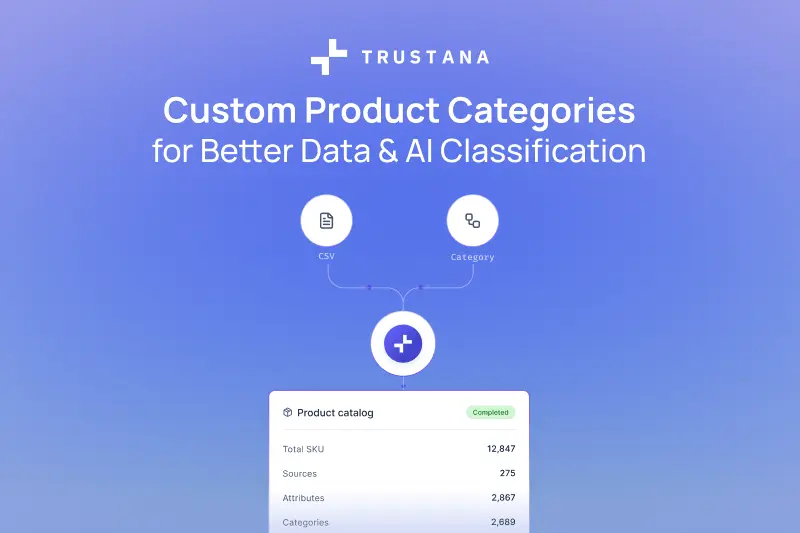
Trustana’s latest Intelligent Attributes feature release solves this problem by delivering the same incredible structured attribute and factual attribute enrichments we’re known for, with an additional layer dedicated specifically to intelligent attributes that generate usecase-focused and AEO product content.
With this new layer of enrichment, AI search tools have the content they need to reliably recommend retailer products, without changing established workflows or adding manual work.
How it works
Trustana’s Intelligent Attributes allow marketing teams to define a secondary AI prompt that runs after structured attributes have been generated. This allows them to directly address how customers are now searching for products using AI tools.
Here’s how we’ve improved enrichment with two distinct stages:
- Structured enrichment - Core structured and factual product attributes are generated using predefined templates, ensuring consistency, scale, and alignment with existing product data standards.
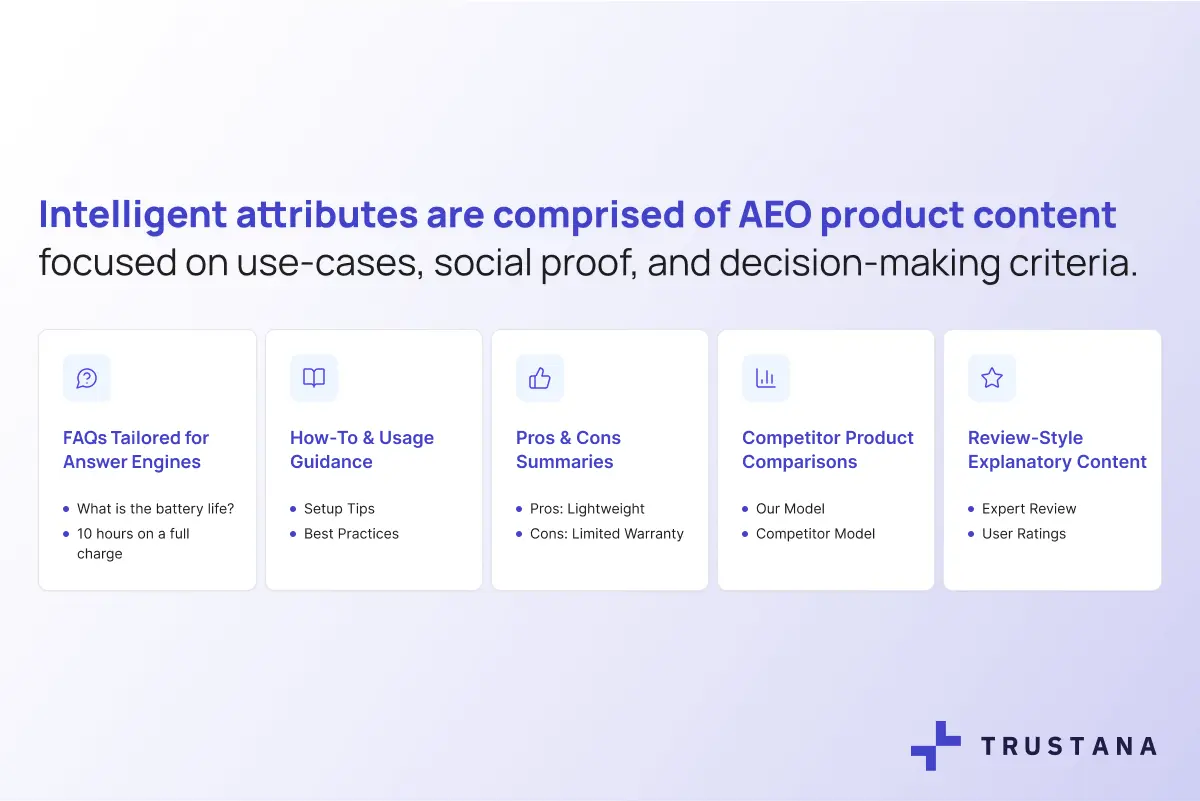
- AEO-focused reasoning - A separate, post-generation prompt runs on top of those structured enrichments, allowing the AI to go deeper with intelligent attributes that shape product discoverability, creating content like:
- FAQs tailored for answer engines
- How-to and usage guidance
- Pros and cons summaries
- Competitor product comparisons
- Review-style explanatory content
This separation gives marketing teams more control over how AEO content is written, without compromising the reliability of their defined core enrichments.
Why this matters
Most AEO content today is created by single-pass prompts, which can be restricting. This type of prompt is designed to fulfill the needs of specific, standardized attributes, like size, color, and so on. They simply aren’t built for nuanced, explanatory content. By introducing this focused second layer, teams can now:
- Improve AI visibility with richer, more complete AEO attributes that better match how answer engines interpret products
- Maintain workflow integrity by keeping enrichment and reasoning logic clearly separated
- Fine-tune content quality without re-engineering existing attribute templates
- Scale AEO content confidently across large catalogs without manual rewrites
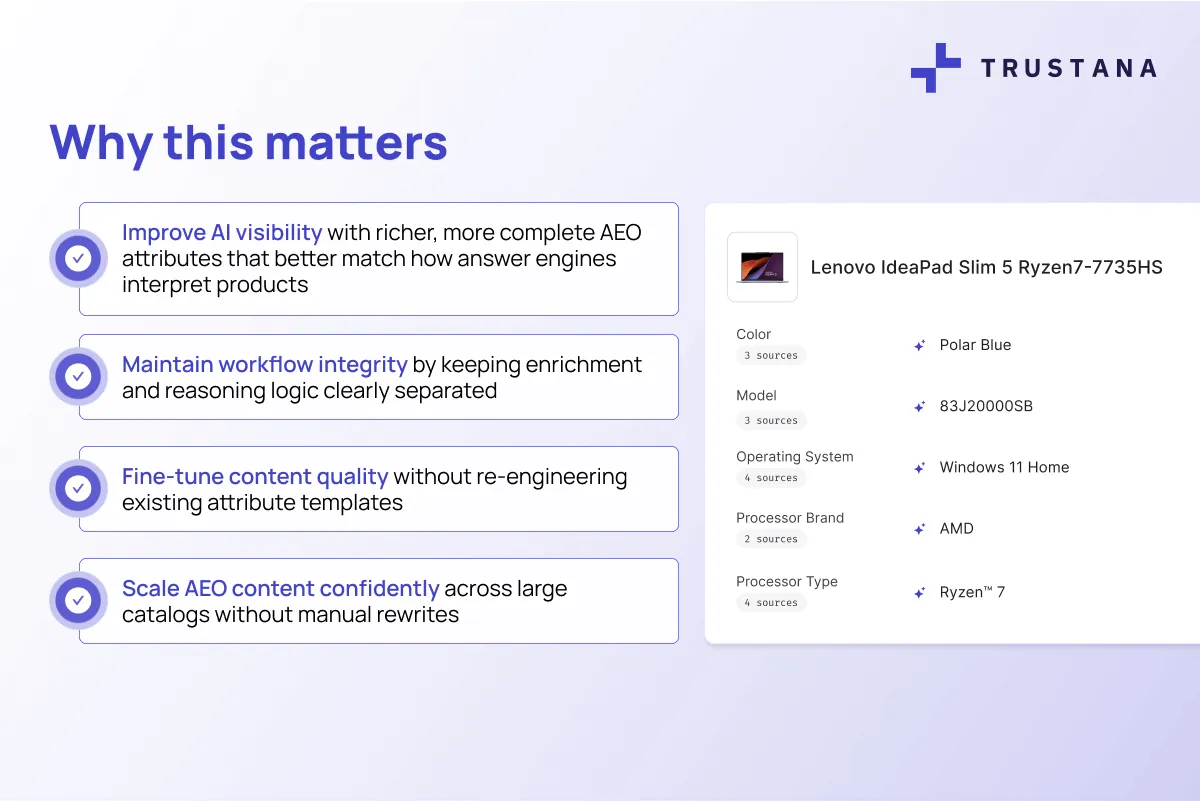
This creates product content that is easier for AI systems to understand, summarize, and present to customers who want to know more about why a product is the best fit for their need, not just product specs.
Intelligent Attributes with Built-in Data Control and Governance
For teams that need higher quality content with strong governance and trust to match, the post-generation prompt is built to operate within strict boundaries and provide product data source transparency. This includes:
- Using only first-party product data, packaging text, images, and AI-generated attributes from earlier enrichment steps.
- Restricted access to third-party websites, scraped content, or external metadata.
- Generating a single, clear value stored directly as the attribute.
That's how modern commerce gets AEO content that is safe, controlled, and customer-ready.
A Flexible Foundation for AEO-Ready Product Content
AI search is evolving fast, and that means retailers who want to stay visible have to have product content that meets customer needs from every angle. Trustana’s Post-Generation Prompts provide a practical middle ground to make that happen. You get structured enrichment for scale, followed by targeted reasoning for AEO to show why their product is the best fit.
If you want to see how this capability can help your team generate high-quality, AEO content at scale, book a demo or talk to sales to explore how it fits into your product content workflow.