
Transparency matters when you're scaling your business with AI. Customers expect clear and accurate product content, and you need confidence in how that content is created.
That’s why we’re launching a new suite of Transparency, Control, and Accountability features at Trustana, built for teams scaling with AI.
Transparency: Know exactly where your content came from
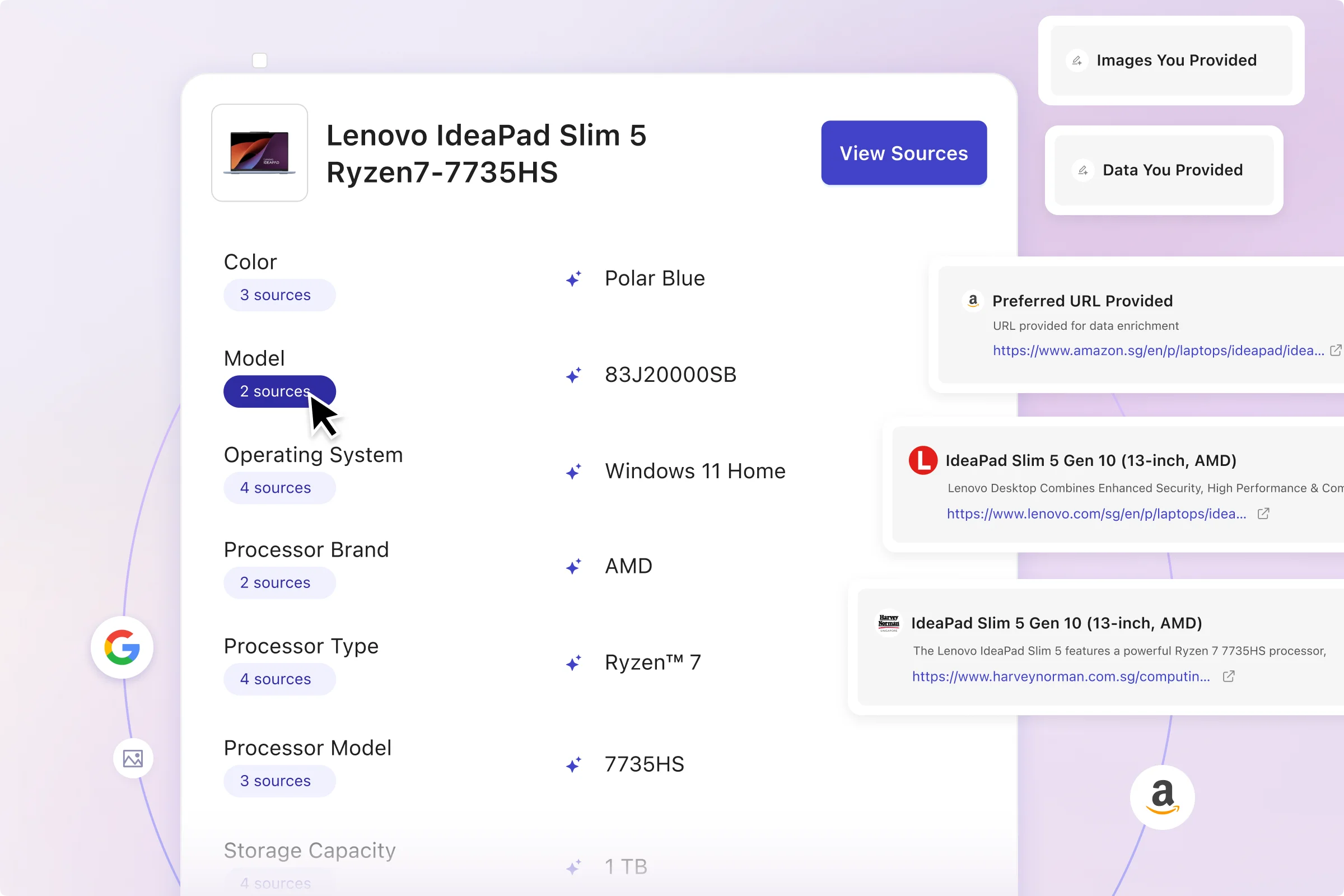
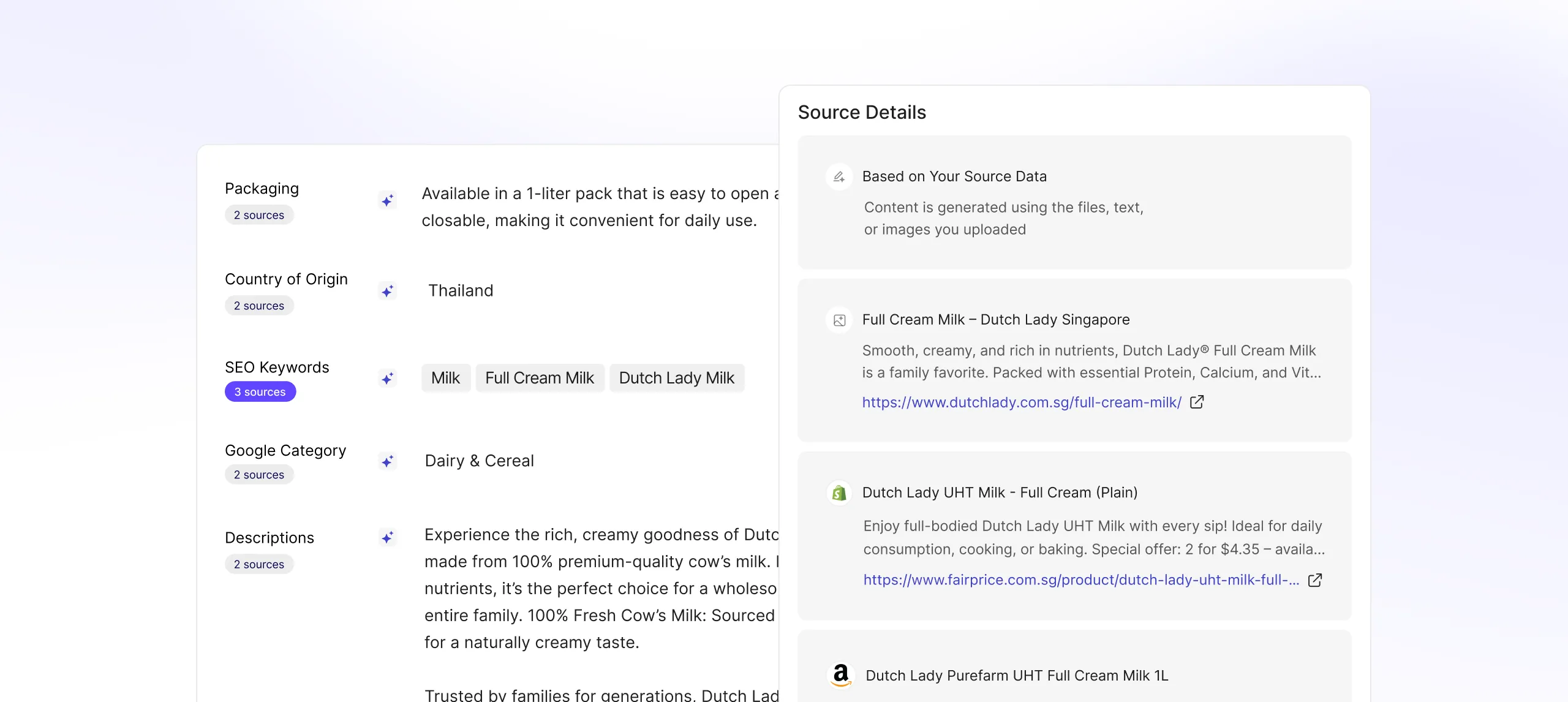
With our new Explainability Layers, you can see how every description, tag, or attribute was created. You’ll know if the data came from your ERP, a vendor PDF, or public sources like manufacturer websites with the following labels:
- Source type (internal, partner, public)
- Source file or link, if available
“What if the data’s wrong?”
You’ll be able to trace where the data was sourced from and update the source upstream, if needed.
“What if the public data is off-brand or low-quality?”
You can control that too (read on!).
Control: You choose the rules
Within the Trustana platform, you can now set rules to direct exactly which data sources our system should prioritize.
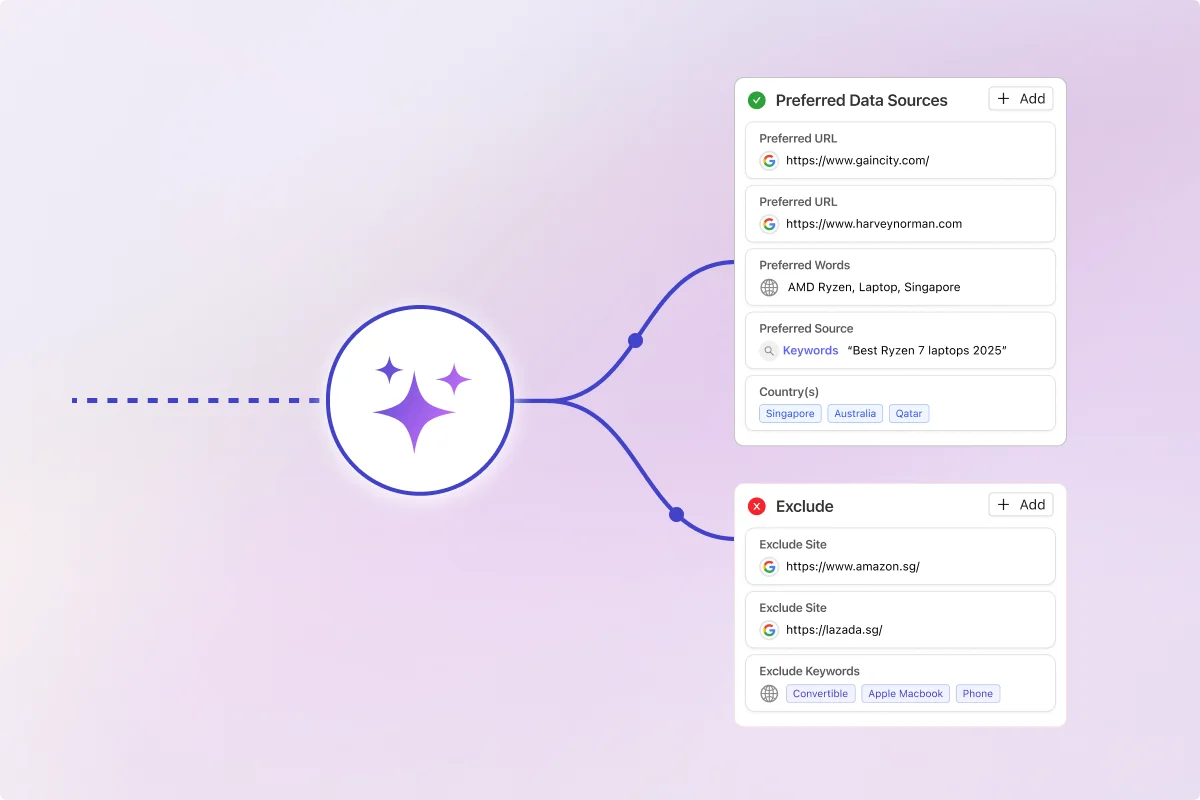
In the settings panel, you can:
- Prioritize your internal product info
- Whitelist approved vendor feeds
- Block or prioritize specific public data sources
- Set content rules
Accountability: Review, approve, improve

Trustana includes built-in approval workflows so your team can review content before it goes live. Every edit that you make goes back into the system for improved performance over time.
- Built-in approval workflows for content before it goes live
- Option to lock content after approval for audit compliance
Why does this matter for your retail business?
Because large scale product content management isn't possible without clarity, control, and trust in your AI systems. Trustana’s latest capabilities directly address challenges that retailers face when scaling product content with AI.
You get complete visibility into how every product description or attribute is created, precise control over data sources that influence your AI content, and intuitive feedback loops. For large retailers, that means fewer mistakes, stronger brand consistency, easier compliance, and smoother operations, no matter how many products you're managing.
Want to try it with your own data? We’ll show you side by side comparisons, your current content vs. AI generated content with full transparency. Get your free demo today